
It is therefore useful for accessing/retrieving static data, as the files uploaded to Freenet are hosted by all users (rather than individual servers). This is perhaps due to the fact that service nodes routing traffic are paid in cryptocurrency to provide a reliable service. Loki services can be accessed through different browsers (e.g., Firefox), and unlike I2P and Freenet, users can surf the clear web using Lokinet. Using I2P data aggregators instead of the network itself can be a viable alternative. This means your computer system is potentially processing illegal data and transferring it to other users within the network. Although I2P may be more reliable, new users are unable to access as much content straight away, which deters some users from switching dark nets.
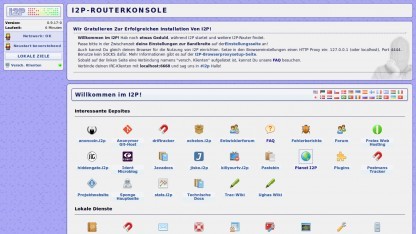
The Invisible Internet Project (I2P) was designed with anonymity and privacy at its very core, and by that measure alone, it’s safe. If you’re seeking to access common sites like Google, YouTube, or Wikipedia, you’ll be disappointed as I2P does not support this. Since I2P focuses on peer-to-peer and community-driven hosting, the quality of the services varies significantly.
Once connected you can send email, browse websites, use blogging and forum software, host websites, take advantage of decentralized file storage, engage in anonymous real-time chat, and much more. While it’s less popular than Tor, its architecture offers greater internal privacy, faster communication within its own ecosystem, and support for anonymous services. These are anonymous websites hosted within the I2P network. Eepsites are accessible only via I2P, ensuring anonymity for both host and visitors. Unlike Tor, I2P focuses on internal (“darknet”) routing, making it ideal for hidden services and avoiding clearnet leaks. For further reading on peer-to-peer darknets, and well as the possibilities of the decentralized and distributed web, I highly encourage you to visit such projects as Urbit (urbit.org), TON (ton.org), Tribler (github.com/Tribler/tribler) and Agregore (agregore.mauve.moe).
These types of anonymous networks are called dark webs because they are not searchable like the public internet, and users need special software to access them. With privacy as well as anonymity remaining paramount concerns for the internet experience today, it is only natural that services like peer-to-peer darknets offer an alternative to what we all know as the “dark web.” What makes Yggdrasil most interesting is that shares a software component, similar to the “traditional” darknets like TOR and I2P; however, it simply allows for the routing of traffic into the Yggdrasil network, and the user must select their peer.
At this time there are two common ways to send and receive email between I2P and regular internet email addresses. Those links will consult well-informed I2P routers to see if the site can be found. This means that your I2P router doesn’t know where that site is, but that does not necessarily mean the site does not exist; other routers may know where it is.
🔄 How The Darknet Works (Using Tor As An Example)
This makes downloading files slower than on traditional torrent clients, so you trade off speed for anonymity. Thanks to 12Snark’s exclusive use of I2P tunnels, which are encrypted and randomized paths that your data usually takes through the network. Once you’re connected to I2P, you get direct access to I2PSnark from the router software.
Key Features Of The I2P Darknet
You do not have to be an “expert” in this space in order to be able to investigate suspects utilizing peer-to-peer darknet services. To reiterate, once connection with a peer has been established, only then can the peer-to-peer darknet sites be traversed. As with all peer-to-peer darknets, the peers have to be visible and maintained in some sort of centralized repository.
The Darknet is not inherently illegal, but its anonymity enables both good and bad use cases. We hope in the future that installation and day to day usage will be as smooth as the Tor network however. It is thereby an entirely separate network, but does provide a much needed alternative that addresses some of the shortcomings of the Tor network.
How A VPN Works

As surveillance escalates globally, I2P adoption will grow among high-risk users (e.g., whistleblowers, cybercriminal groups). Future developments may integrate I2P with decentralized storage (e.g., IPFS) for resilient, censorship-resistant ecosystems. This guide explores I2P’s core functionalities, commands, and configurations for cybersecurity professionals and privacy enthusiasts. Without accessing proxies, visiting the TON domains would not be possible. Said software can be a specific internet browser (like the TOR Browser), an executable file or an operating system configuration.

Access Hidden Services
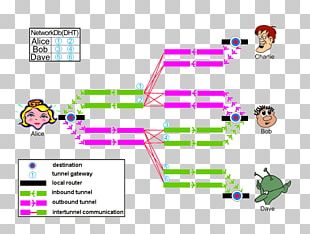
Each router only knows the identity of the previous and next router in the path, not the ultimate source or destination of the data. Data sent over I2P is encrypted and then routed through a series of I2P routers—computers of other I2P users. I2P converts internet traffic into a form that is unreadable to anyone except the intended recipient. Tor works by directing Internet traffic through a free, volunteer-operated network consisting of more than seven thousand relays. Its primary purpose is to enhance the privacy and security of web users, helping to protect personal freedom and privacy from various forms of surveillance and censorship.
I2P Vs Tor
At this time, there are three outproxy plugins (eepsite) listed in the IP2 plugin repository. I2P is a much more reclusive network and is not normally used as a proxy to the clear net. It is not at all unusual to come across dead eepsites which come back at some later time. Add in a URL pattern so that FoxyProxy will only use that I2P setting for eepsites To resume browsing the internet you’ll need to remove those proxy settings. Browsers such as Internet Explorer and Firefox have their own internet connections settings.
Linux Security Blog
The Invisible Internet Project (I2P) is a decentralized, peer-to-peer network that provides strong privacy protections for communication over the internet. The Onion Network, commonly known as Tor, is a free software and open network that enables anonymous communication across the internet. Unlike traditional internet browsing, i2p encrypts data and routes it through multiple nodes across the network, making tracing exceedingly difficult. Yes, users can access surface web sites through i2p, but the performance may be slower due to its routing methods.
The I2P Planet (eepsite) is an aggregate site of activity around the I2P network. Having said that, there are a few places where you can find I2P services if you have no particular destination in mind If you have a plugin in an xpi2p and su3 file, you can upload it to your router. The main I2P router page has tools for IRC, file transfer, email, and web servers, as well as many others.
Our marketplace provides a vast array of goods, emphasizing user security and anonymity in every transaction. It fixes the more famous network’s biggest weaknesses, such as malicious exit nodes, reliance on volunteers, DDoS attacks and timing analysis. However, your internet service provider can still tell that you’re using the I2P network for something, even though it has no idea what for, so use a VPN if you want to avoid that. NordVPN comes with built-in onion routing and is the best VPN for Tor, followed by Surfshark and ExpressVPN (read our full NordVPN review).
I2P requires manual configuration and port management, and in some cases, you may need to adjust applications to work within the network. This simple click also protects your entire system’s traffic from intruders and malicious IP addresses. This is because in cases like that, speed isn’t exactly a priority; staying anonymous is. But if what you’re interested in is engaging in background activities like anonymous file sharing, then you’re better off with I2P. Several top VPN services (which we recommend) even have servers that are optimized for speed and high-performance browsing.
- Its security features include stripping parts of mail headers and delaying outgoing messages to reduce any correlations that could de-anonymize you.
- Want to know more about how NexusXplore can build safety, scale and efficiency into your dark web investigations and research?
- Each network has its strengths and weaknesses, so your decision should align with your specific needs and how much risk you are willing to manage in exchange for privacy or ease of use.
- Tor’s routing is bi-directional, meaning that traffic to and from the destination take the same path through Tor.
- A significant limitation of I2P is its inability to access clearnet websites easily, that’s the regular internet.
- These users and online communities have argued that Tor continues to experience DDOS attacks, and can therefore be very unreliable.
It’s made up of forums, marketplaces, and websites you can’t find with a Google search and requires specialized software to access, such as the Tor Browser. While regular browsers may be sufficient for most everyday online activities, they may not be secure enough for accessing the dark web, where anonymity and privacy are of the utmost importance. These sites are hidden from the regular internet and can only be accessed through the I2P browser. Tor is not the only anonymous communications network currently targeted by DDoS attacks.
Primarily Russian-language deep and dark web forum with a large community of users from CIS countries. During any communication, data leaves the client’s devices via theoutbound tunnels and is received on other devices through their inbound tunnels. I2P, also known as the Invisible Internet Project, stands as a formidable darknet browser akin to Tor. The NSA and other international espionage organizations cannot completely avoid the darknet. Specifically in crimes involving human trafficking and crimes against children, criminals are leveraging AI to fabricate images and data that propagate their malice.
I2P (Invisible Internet Project) is a decentralized anonymizing network that enables secure, private communication and anonymous hosting. In my humble opinion, these networks are the future of what we in law enforcement colloquially refer to as the “dark web,” and I believe we will see the aforementioned “traditional” darknets gravitating their infrastructure toward the distributed/decentralized network overlays. Peer-to-peer darknets are not browser-specific, unlike the TOR browser, which is built upon the Mozilla Firefox framework.